
Virtual Number Forwarding: Benefits for Your Business.
Explore how virtual number call forwarding works, its benefits for businesses, and how it improves accessibility, cost-efficiency, and customer experience.
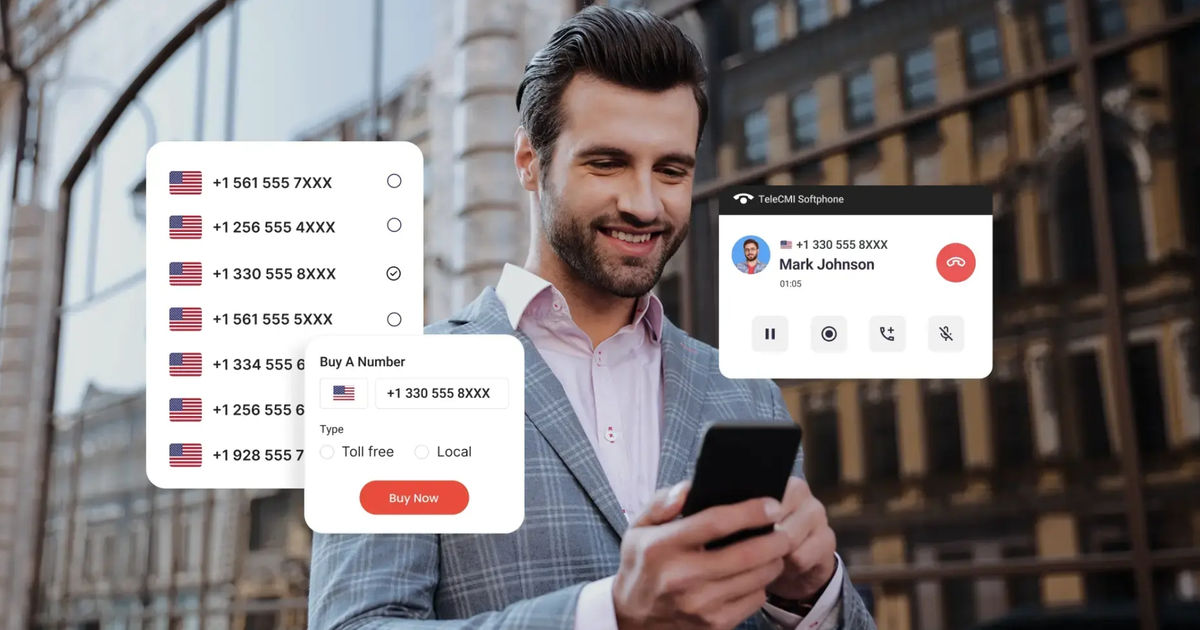
In an era where the “office” can be a high-rise in London, a home studio in Tokyo, or a beachside cafe in Bali, staying connected is no longer about being tethered to a desk. For modern businesses, the phone is still the most vital bridge to the customer. However, the traditional landline is a relic of the past.
Enter virtual number call forwarding. This technology has quietly revolutionized how startups, global corporations, and freelancers manage their communications. It’s the secret sauce that allows a small business to look like a multinational firm and a global giant to feel like a local neighbor.
In this blog, we’ll break down exactly how virtual number call forwarding works, why your business needs it, and how to set it up for maximum impact in 2026.
What Is Virtual Number Call Forwarding?
At its core, a virtual number is a telephone number that isn’t tied to a specific physical phone line or SIM card. Instead, it lives in the cloud. Call forwarding is the engine that makes these numbers useful; it’s the process of rerouting an incoming call from that virtual number to any destination of your choice be it your personal smartphone, a team member’s laptop, or an overseas call center.
How It Works in Practice
Imagine you are a consultant based in New York, but you have a significant client base in London. You can purchase a virtual UK “020” area code number. When a client in London dials that local number:
- The call hits the cloud-based server of your service provider.
- The server checks your pre-set routing rules.
- The call is instantly forwarded to your New York mobile phone.
To the client, it’s a local call. To you, it’s just another incoming inquiry on your preferred device. You can assign different virtual numbers to specific departments (e.g., Sales, Support, Billing) or individual staff members, ensuring that every call reaches the right person, regardless of where they are sitting.
The Benefits of Virtual Number Call Forwarding
Why are businesses ditching traditional PBX systems for virtual forwarding? The advantages go far beyond just “answering the phone.”
1. Increased Accessibility and Flexibility
Modern work is fluid. With virtual call forwarding, your business is never “closed.” You can set schedules so that calls go to your office phone from 9 to 5, and then automatically forward to an after-hours on-call team or a professional voicemail service in the evening. This flexibility ensures you never miss a lead.
2. Radical Cost Efficiency
Setting up physical offices in every country you serve is expensive. Virtual numbers allow you to bypass the need for hardware, specialized wiring, and international long-distance fees. Most providers offer flat-rate monthly plans that are significantly cheaper than traditional enterprise phone contracts.
3. Maintaining a Local Presence
Trust is the currency of business. Customers are much more likely to answer a call from a local area code than a mysterious international number. By using virtual number call forwarding, a company in India can use a California area code to build rapport with US customers, creating a “local” feel that drives higher engagement and conversion rates.
4. Professional Customer Experience
Nothing frustrates a customer more than “phone tag.” Features like simultaneous ringing (where multiple phones ring at once until someone answers) or sequential ringing (where the call tries Person A, then Person B, then Person C) ensure that callers get a live human being as quickly as possible.
How Call Forwarding Services Work Under the Hood
The magic of call forwarding relies on VoIP (Voice over Internet Protocol) technology. Because the voice data is converted into digital packets, it can be manipulated and routed with the precision of an email.
Advanced Routing Methods
- Time-Based Routing: Forward calls based on the time of day. Perfect for “Follow the Sun” support models.
- Geographic Routing: Detect where the caller is located and route them to the nearest branch or a representative who speaks their language.
- Interactive Voice Response (IVR): The “Press 1 for Sales” menu. This ensures the caller self-selects their destination before the forwarding even begins.
Feature Integrations
Modern call forwarding services don’t exist in a vacuum. They integrate directly with your CRM (Customer Relationship Management) software. When a call is forwarded to your mobile, your screen can pop up with the caller’s name, their last purchase, and any open support tickets, allowing for a personalized greeting.
The Role of Call Handling Service in Virtual Forwarding
While technology does the heavy lifting, a call handling service adds the human (or AI-augmented) touch. This is the “management” layer of your communication strategy.
Professionalism and Protocols
A call handling service provides a structured way to manage the flow. They can offer:
- Overflow Handling: If your main team is busy, the call is automatically routed to a backup team of receptionists so the customer never hears a busy signal.
- Call Screening: An automated system or a live assistant can ask for the caller’s name and the purpose of the call before forwarding it to you, allowing you to prioritize high-value clients.
- Call Queuing: If everyone is busy, the service places the caller in a professional queue with hold music or estimated wait times, reducing hang-ups.
How Multilingual Services Benefit Global Businesses
In 2026, the marketplace is truly global. If you want to scale, you have to speak your customer’s language literally. Multilingual services are a game-changer when paired with virtual call forwarding.
Smart Language Routing
By using the caller’s phone number prefix, a virtual system can recognize that a call is coming from Mexico and automatically forward that call to your Spanish-speaking representative.
Expanding Your Reach
Offering support in multiple languages isn’t just a “nice-to-have” anymore; it’s a competitive advantage. It removes the barrier to entry for non-English speaking markets and shows a level of respect for the customer’s culture that builds long-term loyalty. Whether through multilingual human agents or real-time AI translation tools, this ensures your business is inclusive and accessible.
Choosing the Right Virtual Number Call Forwarding Provider
Not all providers are created equal. When shopping for a service, look beyond just the price tag.
Essential Features to Look For:
- Mobile App Quality: Your team needs a robust app to manage their status and answer calls on the go.
- Call Analytics: Can you see how many calls were missed? What was the average wait time? Data is key to improving your service.
- Scalability: Can you add 10 new numbers in 10 different countries in under five minutes?
- Reliability (Uptime): Look for providers that offer “five nines” (99.999%) uptime. If your phone system goes down, your business stops.
Cost-Effectiveness
Watch out for “per-minute” charges on forwarded calls. Many modern providers now offer unlimited forwarding to certain regions, which can save you a fortune as your call volume grows.
What to Expect During a Call Forwarding Setup
Setting up a virtual system is surprisingly simple. You don’t need an IT degree or a closet full of servers.
- Select Your Number: Choose from local, toll-free, or vanity numbers (e.g., 1-800-FLOWERS) provided by the platform.
- Define Your Destinations: Enter the phone numbers or SIP addresses where you want calls to be sent.
- Set Your Rules: Decide if you want “Round Robin” (distributing calls evenly), “Simultaneous Ring,” or a “Weighted” distribution.
- Integrate Your Tools: Connect your forwarding service to Slack, Microsoft Teams, or your CRM to keep your logs updated automatically.
- Test and Launch: Make a few test calls to ensure the audio quality is crisp and the routing works as intended.
Most businesses can go from “zero” to “fully operational” in less than 30 minutes.
Conclusion: A Smart Choice for Modern Businesses
Virtual number call forwarding is no longer a luxury for big corporations it is a foundational tool for any business that values growth and customer satisfaction. By decoupling your business identity from a physical location, you gain the freedom to hire the best talent globally, the ability to save on overhead, and the power to provide a seamless, professional experience to every caller.
In the fast-paced business world of 2026, being “reachable” is the first step toward being “successful.” Virtual call forwarding ensures that no matter where you are or what time it is, your business is always just a local call away.
FAQ Section
1. What is virtual number call forwarding?
It is a service that allows you to have a professional business phone number (local or toll-free) that isn’t connected to a physical line. Instead, all incoming calls are automatically redirected to your chosen mobile, landline, or computer.
2. How does call forwarding work for international calls?
When a customer calls your local virtual number, the call is sent over the internet (VoIP). The provider then “drops” that call onto the local network of your destination phone, wherever it is in the world. Usually, the caller only pays local rates, and you pay a small monthly fee or a low per-minute rate.
3. Can virtual number call forwarding help with customer support?
Absolutely. Features like IVR (menus), call queuing, and time-based routing ensure that support calls are sent to the right agents at the right time, reducing wait times and increasing first-call resolution.
4. Are there any additional features included with call forwarding services?
Yes! Most modern services include call recording (for training), voicemail-to-email transcription, call analytics, “whisper” messages (that tell you the call’s purpose before you connect), and integration with business apps like CRM and Slack.
Boost Your Business with Virtual Numbers